
How to Maintain a Sourdough Starter
Whether you’re new to sourdough or have been baking sourdough bread for many years, you have probably figured out that the health of your starter is key to baking a great loaf of sourdough bread. This comprehensive guide will tell you exactly how to maintain a sourdough starter and keep it active and healthy. Once you have a healthy sourdough starter, you can start baking my favorite beginner sourdough bread recipe.
What is a Sourdough Starter?
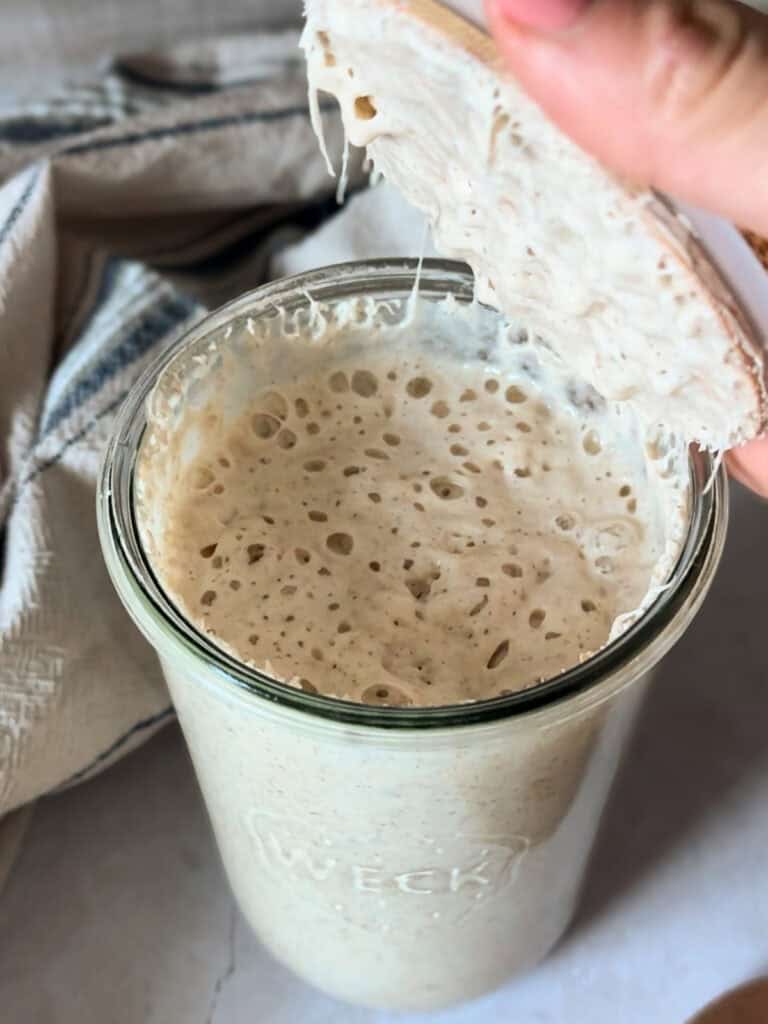
A sourdough starter is a culture of wild yeast and lactic acid bacteria that is used to leaven bread. It is created by mixing fresh flour and water together and subsequently feeding it daily until it rises consistently. This process captures natural yeast from the environment.
Historically, this method (or variations of it) was the only way to make leavened bread. Commercial yeast has largely reduced the use of this traditional bread making method. Sourdough bread, however, is increasing in popularity due to its health benefits in the recent years.
I highly recommend getting an established starter from a friend if you can. This way you can get started with sourdough baking right away. Otherwise, you can check out my post on how to make a sourdough starter. Once you have your hands on a sourdough starter, you must make sure it is healthy and active enough to bake with.
Signs of an Active Sourdough Starter
There are several tell-tale signs that indicate your starter is healthy and active.
Your Sourdough Starter Reliably Rises
The main sign you will notice is that your starter will rise reliably after feeding it. Do note that it is important to use the proper feeding ratio when feeding your sourdough starter. If you do not use the correct ratio when feeding your starter, your starter will become weak and will not reliably rise. If you are unsure about what the proper feeding ratio to use for your starter is, check out my post that goes in depth into sourdough feeding ratios.
No Visible Hooch
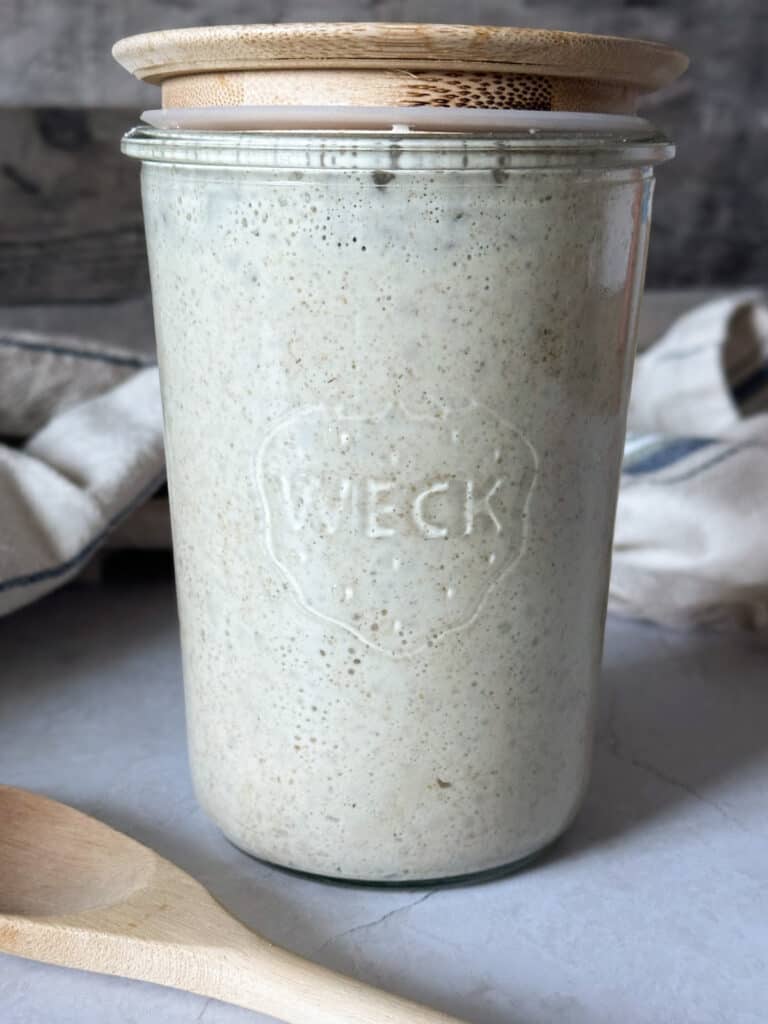
When your starter is ready to bake, there should be no liquid (aka “hooch”) on the surface. Liquid on the surface of your starter indicates that it has used all its food and is hungry. This liquid only appears when the starter has not been fed in a long time and is not ready to bake with.
Texture
A healthy starter should be thick like pancake batter. It should not be particularly runny. If your starter rapidly pours out of the jar, it is not ready to bake with.
What About the Float Test?
In my experience, the float test is not a reliable indicator of a healthy starter. The idea behind the float test is that your starter will float in water because it has so much air in it when active. This can be a sign that your starter has risen, however there are many factors that can affect how much air is in your starter. For example, if you stir or flatten your starter when scooping it out, it can release much of the air in the starter and make this test fail.
Instead, use a glass jar and mark the starting height of your starter with a rubber band. This is an easy way to objectively assess if your starter is rising.
Signs Your Sourdough Starter is Weak
The most obvious sign that your starter is weak is your loaf of bread will turn out flat. Ideally, you will recognize the signs of a weak starter before you bake though.
A weak starter will appear thin, runny and will have a strong acetone-like aroma. It also will not double in size when fed. If you notice a layer of gray or dark liquid on the surface, this is hooch. Hooch will make your sourdough starter acidic and weak. Pour it off and feed your starter several times before baking with it.
How to Strengthen Sourdough Starter
If you notice your sourdough starter is weak, you can strengthen it pretty quickly. Just feeding your starter a few extra times with a higher proportion of flour and water compared to the amount of starter will do a lot for the health of your starter. I would feed your starter a 1:2:2 ratio of starter to flour to water respectively.
You can also boost your starter by feeding it with rye flour or whole wheat flour. Substitute half of the flour in your feed for rye or whole wheat flour.
Patience is key here. If your starter is not doubling within 5-10 hours after feeding it, it is not ready to bake with.
How to Feed a Sourdough Starter
If you are using my sourdough bread recipe, you will need 25 g of starter mixed with 50 g of flour and 50 g of water. If you need to make more than one loaf, simply increase the amount of ingredients, while maintaining the right proportions.
In most cases, you should always feed your starter with equal parts water and flour. Advanced bakers might experiment with different ratios such as is found in a stiff starter.
In general, the amount of starter should always be less than the amount of water and flour during feeds. Too much starter will result in a weaker starter because it is not getting as much flour, which is the yeast’s food source.
How Often to Feed Sourdough Starter
For Frequent Bakers
The only time I recommend feeding your starter daily is if you are baking bread daily. Otherwise, you are probably overproducing starter and wasting ingredients. Unless you have a home microbakery, you probably do not bake bread on a daily basis.
If you bake a couple times per week, or even only every couple of weeks, you do not need to feed your starter until the day before you are going to bake.
The caveat with this method is that you NEED to store your starter in the fridge.
The refrigerator slows the fermentation in your starter enough that you do not need to worry about feeding it every day. Yeast are not very active in cold temperatures. They do not die, but rather go into a more dormant state.
Feeding Schedule for Frequent Bakers
The day before you plan on baking, simply pull out your starter the night before. Feed it the proper feeding ratio (usually 1:1:1 or 1:2:2), and let it sit on the counter overnight. By morning, your starter should have doubled in size and will appear bubbly throughout. It is now ready to use it in your favorite sourdough recipes.
For Infrequent Bakers
An infrequent baker only bakes a couple times a month or less. If this is you, pull your starter out two days before baking. Feed it 2-3 times before you plan on baking, spacing your feeds out by about 8-12 hours.
Each feed should use 25 g of starter, with 50 g flour and 50 g water. This method is usually adequate to strengthen your starter, but if it is still not doubling, continue to feed it until it does.
Is My Sourdough Starter Dead?
If you haven’t baked in a while, you may wonder if your sourdough starter is dead. More than likely, your sourdough starter is not dead. Believe it or not, it is VERY hard to kill a sourdough starter.
Sourdough starters are a living culture. The yeast and bacteria become active when food is in abundance, and go dormant when food is scarce. You will find that even very old starter that has been sitting in the back of the fridge for months can usually be revived with a few feedings.
That being said, there are times when a sourdough starter actually goes bad and should not be used.
How to Tell if Sourdough Starter is Bad
As mentioned above, it is very hard to kill or ruin a starter (unless you accidentally bake it! Don’t ask me how I know this). The main sign you will see if your starter is bad is that it will have mold growing on it.
You may notice white or gray appearing fuzz on the inside of the jar. You may also notice a pink sludge on the surface of your starter. If you see any of these signs, don’t use your starter. You will need a new starter for health and safety purposes.
What is the Black Liquid on Sourdough Starter?
Please note that it is very common for sourdough starter to develop a layer of clear liquid on the surface of the starter. If the starter has not been fed in a while, it may even develop a gray to black appearing liquid on the surface. This is not mold. This liquid is actually a byproduct of the fermentation process from lactic acid bacteria in your starter.
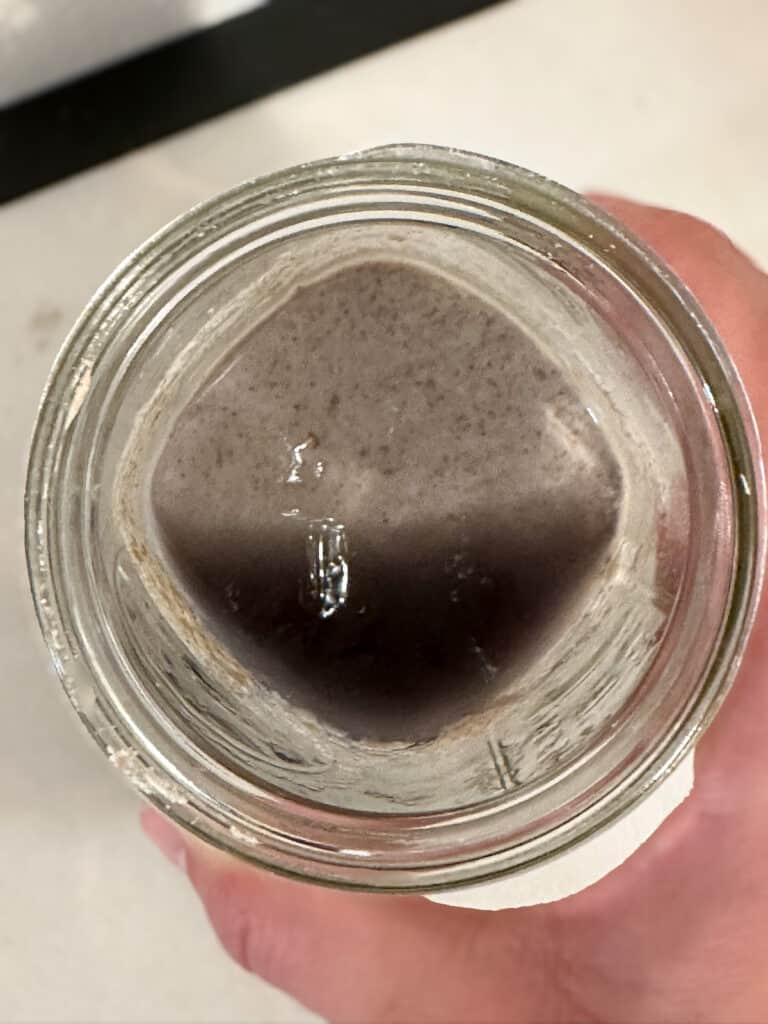
Commonly referred to as “hooch,” this liquid is not a sign your starter is bad. It is, however, a sign your starter is hungry.
I do not recommend stirring in the hooch. It can make your starter taste more sour, but it will also make it more acidic. An overly acidic starter inhibits yeast growth, which will make it harder to proof your sourdough bread.
Reviving Sourdough Starter from Fridge
If you have gone many months without baking or feeding your sourdough starter, you may wonder if your sourdough starter is dead. As we learned earlier in this article, it is probably not dead. It will, however, require some TLC to revive.
A starter stored in the fridge for many months may have a thick layer of hooch on the surface. Pour off this liquid and any thick dark appearing crust that may also have formed on the surface of the starter (make sure there is no mold).
Scoop out a spoonful of the starter (about 25 g) and place it in a separate clean jar. Feed the starter 50 g flour and 50 g water. You can use all purpose flour or bread flour to feed your starter.
What is the Best Flour to Feed a Sourdough Starter
Sourdough starters are very versatile and resilient. Most people can get away with using whatever fresh flour they have on hand. For maintenance of your starter, use all purpose flour or bread flour.
You can also use other flours such as rye flour or whole wheat flour. I usually recommend using these types of flours if your starter is weak or you are reviving it from the fridge. When feeding your starter, substitute half of the regular flour for the rye or whole wheat flour. Rye and whole wheat flour both provide extra nutrients that are very effective at quickly strengthening starter.
What is the Best Water Temperature to Feed a Sourdough Starter
Water temperature is another important component of feeding a starter. The most important thing to remember when it comes to water temperature is to avoid using hot water. Temperatures above 120F can kill yeast. Slightly warm water is okay and good if you want to speed up the fermentation time slightly. Otherwise you can use feed your starter with room temperature water or even cold water. Cold water will make it take longer for the starter to rise but it will not hurt it.
What to Do with Extra Sourdough Starter?
Extra sourdough starter can be composted or used in sourdough discard recipes. These recipes incorporate excess sourdough starter when the feeding process yields more starter than you need for an active starter recipe.
This sourdough starter can be used in so many delicious baked goods. Some of my favorite and most popular recipes are my sourdough discard lemon cookies, my sourdough maple pecan scones, my sourdough discard lemon bars, and my sourdough discard pretzel bites.






I’m so very glad I found your site. I’ve baked yesterday breads for many years, but I’m new to sourdough baking. I’m impressed with the health benefits of sourdough and regularly purchase it at my local bakery. I want to be able to bake this in my own kitchen.
Thank you for all the information. I feel I can attempt this endeavor with much more confidence.